
Fools rushed in
Oklahoma needs comparable pay data for setting officials' salaries

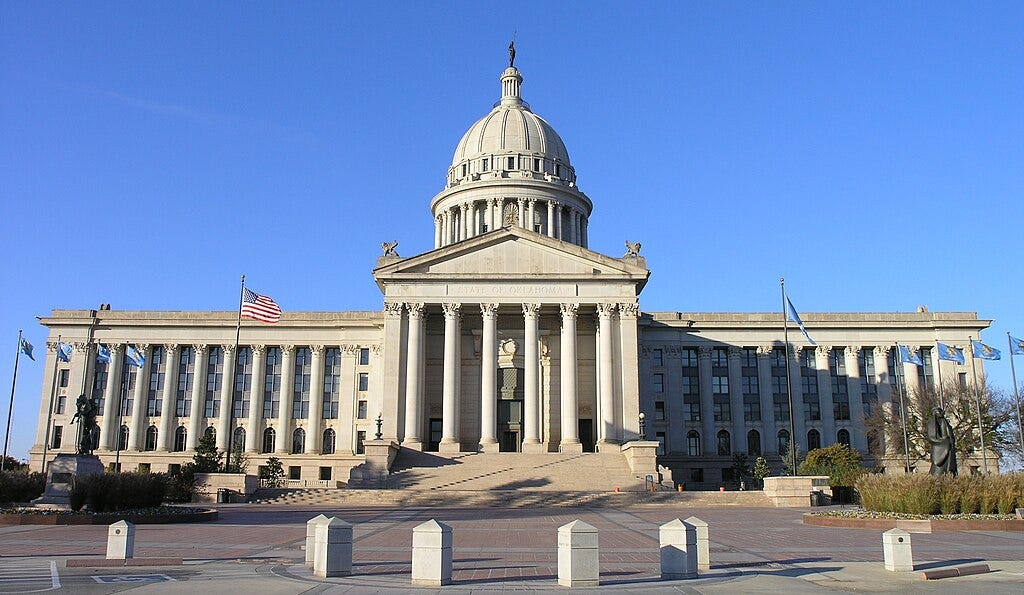

The newly formed Statewide Official Compensation Commission decided that the Oklahoma State Superintendent should earn more than all but one governor in the nation. At $250,000 a year, the state superintendent will earn the same as the New York Governor, who has highest gubernatorial salary in the U.S.
The members justified this by noting some large school districts pay its superintendents higher, not understanding the differences between running a state agency as an elected official and operating a district of multiple schools and tens of thousands of students as a hired employee.
That ignorance is going to cost Oklahoma taxpayers.
Maybe the experiment of this appointed commission should be halted. At a minimum, the qualifications of the members ought to be reviewed to ensure they understand the roles of government, have experience in setting salary schedules and are willing do some homework to prepare for votes.
The Legislature created the commission earlier to year to cede its authority in deciding salaries for the 11 statewide elected offices. The same members also make up the Board on Legislative Compensation, which decides legislative salaries. It hasn’t increased legislative salaries in three years.
It seems like one board could handle it all. Then again, maybe not this specific group of people.
‘Little consistency’
In a well-written story from Tres Savage at NonDoc, the SOCC members clearly didn’t know what they were doing at two meetings on Wednesday.
One member didn’t know the name of the state treasurer. Another didn’t know that the state Corporation Commission was different from the 77 county commissions. And yet a third made the false statement that it’s rare a seat goes uncontested (88 incumbents ran unopposed in the last election) and all lawmakers stay until term-limited (only six of the 16 new legislators elected in 2012 served until termed out).
After denying legislators a raise, Savage wrote that “as the board trudged through the other statewide elected positions, motions and votes carried little consistency.”
The votes and discussions made little sense. It appears the commissioners were governing on emotions and assumptions, not comparable salary data or research.
In the end, the Oklahoma State Superintendent came out as the highest paid public employee at a quarter of a million dollars a year (up from $124,373), and the governor ranks as the 8th most-compensated public servant at $155,000 (up from $147,000).
Add this to the latest failure in state government.
Comparable pay
Labor Commissioner Leslie Osborn called the actions “embarrassing” and “handled horribly.”
“We statewide elected (officials) were sent an email asking for input. I sent a reply weeks ago suggesting a study of what commensurate sized appointed agency heads made,” Osborn. “I would assume the governor should make the most and that there should be queries as to discrepancies in the other office holders’ pay.”
That is a good suggestion and something all businesses do when setting and reviewing salaries.
A look at national governor salaries show that Oklahoma’s $147,000 (now $155,000) is within the region: $101,707 in Kansas, $140,596 in Missouri, $158,739 in Arkansas, $153,750 in Texas, $125,185 in Louisiana, $110,000 in New Mexico and $90,000 in Colorado.
The average salary is $149,000 with a range from $250,000 in New York to $70,000 in Maine.
The last comparison of U.S. state superintendents easily found online was from a 2017 analysis in Education Week magazine. In it, the Oklahoma State Superintendent salary at $124,373 ranked 38th among states and Washington, D.C. The average state superintendent salary was $174,000 with a range of $300,000 in Mississippi to $85,000 in Arizona. Differences exist in agency size, duties and whether elected or appointed.
That is the type of information commissioners should have required to be compiled before randomly setting salaries.
Osborn made another point about the differences between statewide elected officials’ salaries. It stands out that the labor commissioner earned $105,053 while corporation commissioners, state treasurer, state auditor and insurance commissioner all earned the same and higher - $114,713.
“The only reason the labor commissioner makes the least is because the last time a pay increase was made, former Commissioner (Brenda) Reneau was in office (1994 to 2006) and was battling the Legislature on an issue. In response, they raised all salaries, except hers, in punishment.
“Decades later all labor commissioners have been paid less than other elected (officials) because of a long-ago political feud. None of this was discussed; no historical data given, no studies on agency pay undertaken.”
As originally reported by NonDoc, here are the salary changes in order of new pay:
State Superintendent from $124,373 to $250,000;
Attorney general from $132,825 to $185,000;
Insurance commissioner from $114,713 to $185,000;
Treasurer from $114,713 to $175,000;
Corporation commissioners from $114,713 to $165,000;
Governor from $147,000 to $155,000;
Auditor and inspector from $114,713 to $150,000;
Lieutenant governor from $114,713 to $145,000; and
Labor commissioner from $105,053 to $135,000.
Education reaction
At least three candidates for state superintendent have said they will not accept the salary increase if elected next year.
Republican Rob Miller (former Bixby superintendent) in a statement called it “tone deaf and fundamentally out of touch with classroom realities,” pledging to donate the amount to student scholarships and education charities.
Democratic candidate Craig McVay (former superintendent of El Reno) released social media statements saying he would donate the raise to nonprofit tutoring programs, adding, “Instead of focusing on salary increases for elected officials, we ought to be investing those resources directly in student support.”
Oklahoma City television station KFOR reported that Republican John Cox (former superintendent at Peggs) said the increase was “excessive and out of step” and promise to donate it toward post-high school scholarships.
Other candidates for state superintendent - Republican Adam Pugh (state senator from Edmond) and former Tulsa Public Schools board members, Democrat Jeanettie Marshall and independent Jerry Griffin - haven’t released statements regarding the increase.
Qualified board members
The Legislature believed an independent commission would be better at determining the pay for state officials. In theory, that should be true. But, it depends on the quality of the board members (remember the former State School Board that rubberstamped everything former Superintendent Ryan Walters wanted).
The commission - and Board on Legislative Compensation - are made up of nine members: five appointed by the governor, two from the Senate and two from the House. The chairman of the Tax Commission and executive director of the Oklahoma Management Enterprise Services are non-voting members.
Gov. Kevin Stitt appointed the chairman Brian Jackson along with members Jennifer Miller, Robert DeNegri, David “Chip” Carter and Scott Douglas. The Senate appointed Gary Unruh and Jeff Baumann, and the House appointed Matt Tilly and James Leewright.
Carter at least twice backed Stitt’s request to move more statewide elected positions to become governor appointments. He used the labor commissioner job as an example, diminishing the work for its role in elevator and amusement ride inspections. He neglects to mention the responsibilities of ensuring workplace safety and enforcing labor laws including investigating unpaid wages, minimum wage and overtime disputes.
That statement reflects a partisan appointment rather than an independent view for setting the pay for elected officials. But, considering the commissioners don’t know the differences in the scope of the duties between school district superintendents and the state’s elected superintendent, maybe it is just more ignorance.
The labor commissioner still receives the lowest salary of all others, which isn’t explained - unless the commission deems workplace safety and fair worker pay a low priority for Oklahoma.